
A recent LawNews article raised concerns that AI-generated submissions may be adding unnecessary length and complexity to some Tenancy Tribunal cases. The issue is not that people are using technology to help them prepare. The problem is when AI is used as a shortcut for legal advice, evidence or common sense.
The Tenancy Tribunal is designed to be accessible. Landlords and tenants do not usually need lawyers, and the process is intended to resolve disputes in a practical and relatively straightforward way. But even a simple dispute can become harder to manage when the material submitted is long, repetitive, based on incorrect assumptions, or filled with legal-sounding arguments that do not actually apply.
For landlords, this is a timely reminder that the best preparation for any tenancy dispute is not a perfectly worded submission. It is good record-keeping.
AI can help with structure, not substance
Used carefully, AI can be helpful for administrative tasks. For example, it may help you:
- organise events into a clear timeline
- summarise a long email chain
- draft a plain-English explanation of what happened
- identify gaps in your records
- make your notes easier to read
That can be useful, especially when you are trying to explain a dispute clearly and calmly.
But AI should not be relied on to tell you whether your claim will succeed, what compensation you are entitled to, or what the law says in your specific situation. AI tools can get the law wrong, refer to overseas rules, make up cases or sound confident about something that is not correct.
In a tenancy dispute, sounding official is not the same as being right.
The Tribunal still needs evidence
The Tenancy Tribunal makes decisions based on the facts, the law and the evidence provided by each party.
That means landlords (and tenants) should focus less on producing a long argument and more on providing clear, relevant supporting material. Depending on the issue, this may include:
- the tenancy agreement
- rent records.
- inspection reports.
- photos or videos.
- invoices or quotes.
- messages or emails between the landlord and tenant
- 14-day notices or other formal notices
- records of maintenance requests and responses
- Healthy Homes compliance documents
- bond records
A short, well-organised claim supported by clear evidence will usually be more useful than a lengthy document full of broad allegations, assumptions or copied legal language.
Good records make disputes easier to resolve
Most tenancy issues do not start at the Tribunal. They start with a missed rent payment, a maintenance concern, damage at the property, confusion about notice periods, or a disagreement about who said what.
When records are kept properly throughout the tenancy, landlords are in a much stronger position if a dispute arises later.
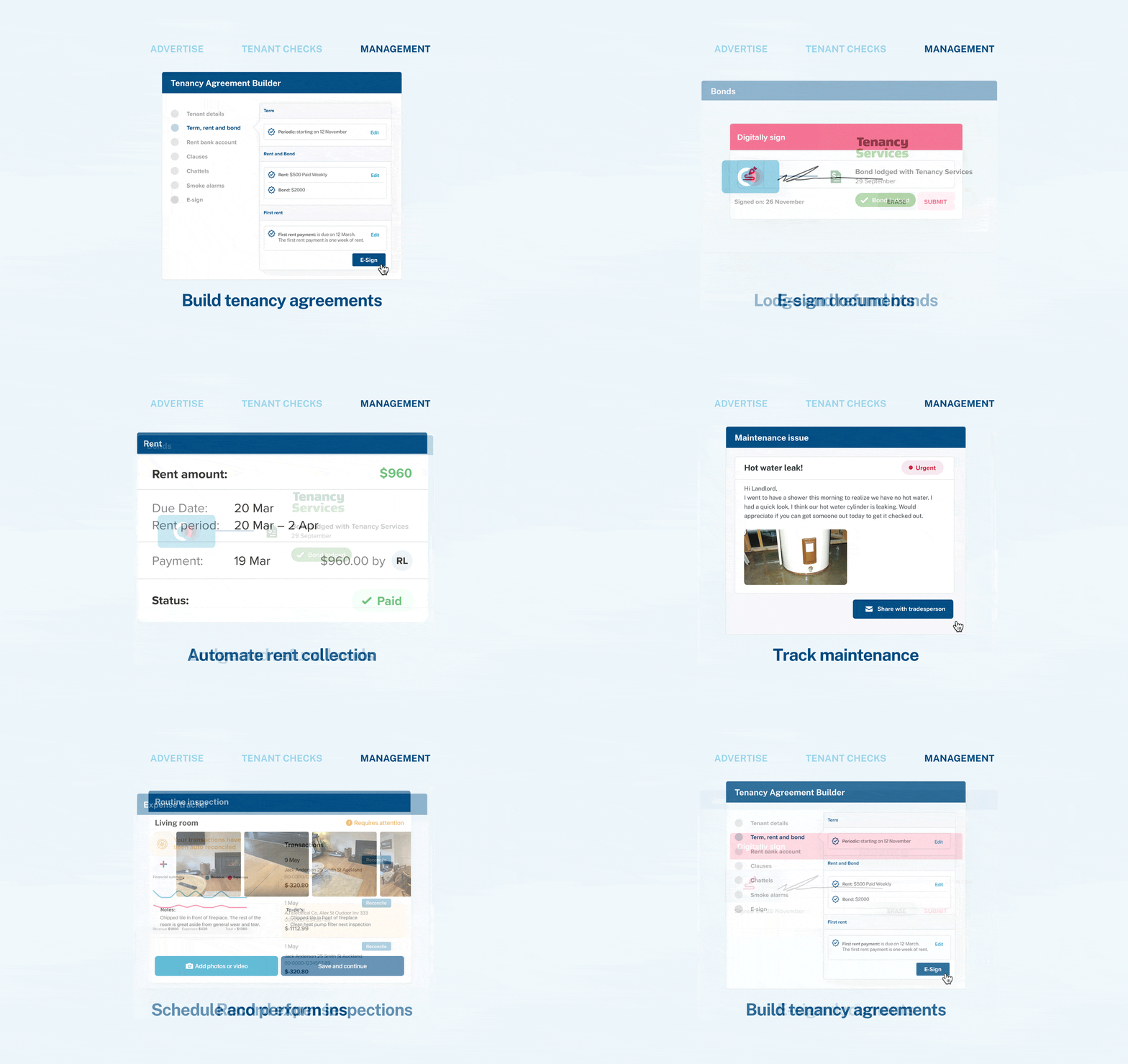
The more organised the tenancy records are, the less pressure there is to reconstruct events later. Tools like myRent are designed to help with this by keeping important tenancy information - from rent records and notices to maintenance, inspections and documents - organised in one place.
Avoid putting private tenancy information into public AI tools
Landlords and tenants should also be careful about privacy.
Tenancy records often include personal information about tenants, applicants, referees, neighbours or contractors. Before using an AI tool to summarise or draft anything, consider whether you are entering private information into a third-party system.
As a general rule, avoid putting names, contact details, addresses, financial information, medical information, identification documents or sensitive correspondence into general AI tools unless you are confident about how that information will be handled.
A safer approach is to remove identifying details and ask AI to help with structure only. For example, instead of uploading a full email chain, you could write:
“Help me organise this tenancy dispute into a clear timeline. Use placeholders like [tenant], [property] and [date].”
Keep it clear, concise and relevant
If you are preparing for the Tenancy Tribunal, the goal is not to overwhelm the other party or the adjudicator with paperwork. The goal is to make the issue easy to understand.
A useful structure is:
- What happened?
- When did it happen?
- What steps were taken to resolve it?
- What evidence supports your position?
- What outcome are you asking for?
This approach is simple, but effective. It keeps the focus on the actual dispute rather than unnecessary background detail.
AI is not the problem - poor preparation is
AI will almost certainly become more common in tenancy disputes. In some cases, it may improve access to justice by helping people explain themselves more clearly. But it can also create confusion when it produces long, legalistic or inaccurate submissions.
For landlords, the practical takeaway is simple: use AI carefully, but do not rely on it to create your case.
The best protection is still the same as it has always been: keep good records, communicate clearly, follow the correct process, and make sure your evidence supports what you are asking for.
A well-managed tenancy creates a much stronger foundation than any AI-generated argument ever could.
The information contained in this article is exclusively for promotional purposes. It does not in any way constitute legal advice and should not be relied upon as the basis for any legal action or contractual dealings. The information is not and does not attempt to be, a comprehensive account of the relevant law in New Zealand. If you require legal advice, you should seek independent legal counsel. myRent.co.nz does not accept any liability that may arise from the use of this information.